Anthropology is often understood as the study of humans, yet this generalisation overlooks the significant role of the non-human world in shaping our lives. Our interactions with the environment shape us just as much as we shape it, making it crucial to include environmental anthropology as a cornerstone of the discipline. Roy Rappaport’s contributions to this area make his theory of “operational” and “cognized” environments a solid framework in which to study and explore different ecological moments. After explaining the concepts mentioned before, this essay will explore the distinction between the operational and cognized environment through the case study of water in Mexico’s Chiapas region. By exploring how locals and activists, the state, and capitalist entities perceive the cognized environment; I will explore the distinctions between operational and cognized, as well as how they teach us more about our interactions with the human and non-human world.
Roy Rappaport’s work in New Guinea on ritual regulation and environmental relation (Rappaport, 1967) brought about a new lens to evaluate anthropological interaction with the world. Working with the Tsembaga, he saw that they used pigs to support the maintenance of their agricultural endeavours. Pigs contribute by keeping the area clean, helping manage the vegetation, and softening the soil for rooting. Once the pig population grows too large, they are no longer an asset and drain the agricultural resources. A routine act, Rappaport saw a ritual which involved killing pigs to satisfy the ‘needs’ of their ancestors – with the killing of these pigs rarely happening outside of the ritual. The Tsembaga behaved like this because they believed conducting this ritual had the capacity to rearrange their relationship to the spirits in the supernatural realm. Whilst these sacrifices are done as a need to their cosmology, they also coincide with ‘scientific’ and ecological benefits. By sacrificing the pigs, the Tsembaga are also regulating pig populations which in turn keeps their agricultural and ecological systems in check. Here is where Rappaport’s “cognized” and “operational” environments come into question. The cognized environment is conceptualised through culture and ideology, whereas the operational environment is identified through ecology and science. In the example of the Tsembaga, the cognized environment is the ritual being conducted in the name of their ancestors; referring to how people come to understand the world through their cultural beliefs, not rooted in data but rather in their worldview. Whereas the operational environment here would be that killing the pigs stops the animals from overeating the crops and destroying the fertility of the land; it is an understanding of the environment through the collection of ‘factual’ and scientific data. In Rappaport’s ethnography, the operational and cognized environments are appropriate to each other because they are aligned. It’s not just the spirits who are satisfied that the pigs are killed, but it is also ecologically logical. What Rappaport’s research teaches us is that traditional ecological knowledge [TEK] is not primitive or illogical, but is actually sophisticated in the way that it creates a direct relationship between human and environment. Ultimately, by creating a distinction between the operational and cognized environments, we can analyse how in tune human culture is with the ecological world – as well as how disconnected it is. With that being said, Rappaport himself later acknowledged and realised that this model of thinking can overemphasize ecological function and not delve deep enough into the complexity of cultural understandings; saying that he could have expanded or explored the “role of Big Men in the management of affairs” (Rappaport, 1984). For that reason I will be using the cognized and operational model as well as a historical and political ecological approach – as Wolf had critiqued him for not using to strengthen his arguments (1999). In moving from Rappaport’s small-scale study in New Guinea to the broader political ecology of Chiapas, we scale up the theory to see its limits and potential. By doing so, the distinction between the cognized and operational can be understood more wholly as I expand on the case study of water in Chiapas.
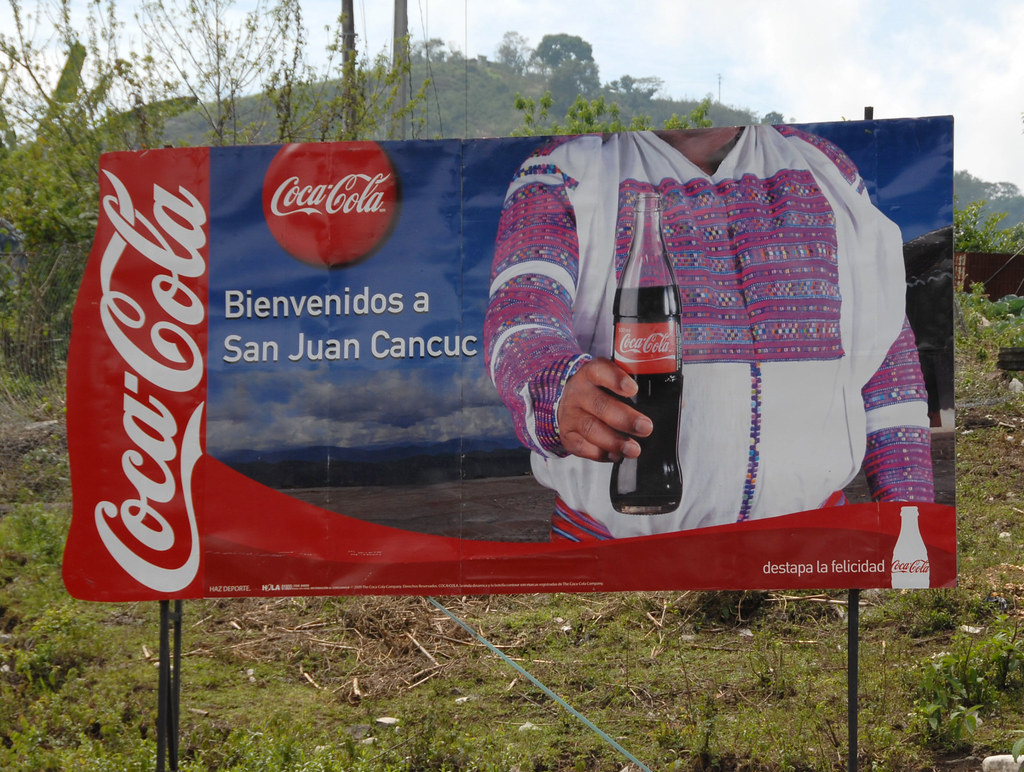
“El Agua Es Oro” [water is gold] is a phrase that many activists in the state of Chiapas are familiar with. For an area with the most rainfall in Mexico, residents face intense water scarcity – with the little water there is being heavily polluted. It reaches the point where fizzy drinks are more accessible than potable water, “soft drinks have always been more available than water” (Lopez and Jacobs, 2018). As a result, a health crisis has sprung resulting in an overwhelming surge of diabetes and heart diseases. Shadowing this issue is the huge Coca-Cola factory in San Cristóbal. The federal government and Femsa (a large food and drink company that has the rights to distribute Coca-Cola in Latin America) have a deal which has allowed them to use and abuse the water infrastructure in place, leading to the factory utilising over 300,000 gallons of water a day. As any financial gain made is redirected away from the local government, there is not sufficient money to reinvest into supporting the general population. This has resulted in the people of Chiapas only gaining access to water through a plastic bottle or the occasional dirty pipe. Thinking back to the Mayan origins of the area, water has always been a central and communal source – a concept that remains rooted in contemporary activism in Chiapas. In the pre-conquest times, it is clear from the archeological remains of the infrastructure and worship (Chac the Rain God) that it was seen as something essential; controlled to ensure its abundance with aqueducts, reservoirs and pressurised water systems, as well as the occasional human sacrifice when there were droughts. When Spanish Conquistadors arrived, they wanted to get rid of the humidity to feel more closely as if they were in their respective European landscape. “An ecological destruction without parallel” (Riojas, 2001), their solution was to completely destroy the original water infrastructure, drain lakes, divert rivers, leading to the utter destruction of the flora and fauna in the area. Colonial governments implemented policies that intended to completely dry out the area. As well as this, there was the building of new infrastructure that was developed which has continued to impact Mexican ecology to this day. Exemplified in the construction of the Gran Canal de Desagüe [Great Drainage Canal] that was fully completed in 1900, which has permanently destroyed the natural wetlands, local flora and fauna diversity, degraded the soil (Valle, 2009). Its results have been a permanent change to the ecological environment. Similar to Helmreich (2005) ethnography on how biologists define ‘native’ species in Hawaii as a classification defined by the presence of non-local humans, we can differentiate how different groups that have managed water have maintained a ‘nativeness’ about how they have done it. In Hawaii, the definition of ‘native’ was inclusive of ‘alien’ species that were brought centuries before, showing that not all ‘ecological invasions’ are perceived equally (McNeely, 2000). Proven by Chiapas, it can be argued that when Mayans had control over the water supply, it is different to how the post-colonial governments and private enterprises have control over it. Whilst the Mayans manipulated the water to ensure its abundance, the state and capitalists have since manipulated the water to extract it. So whilst a foreign human presence was forced on to the environment in both scenarios, the infrastructure involved in both worked differently with the geography. What this compressed contextual overview of the relationship between water and people in Chiapas hopes to achieve is to reunite how biology and culture are intertwined, grounded in the concept of preserving “a view of humanity as part of nature” (Rappaport, 1967).
Water, like the pigs, is directly related to basic blocks of human survival. These are resources provided to humans by the environmental world, hence how this parallel is made relevant. Whilst Rappaport’s ethnography demonstrates a small-scale society whose operational and cognized environment are in tune with each other, Chiapas demonstrates what occurs when this is not true. When thinking about how these theories work on a larger scale, there are multiple actors with different cognized environments. We can explore them through how the Mexican state, Coca-Cola (as a capitalist entity), and the local population in Chiapas perceives the cognized – and in turn, operational – environment. Water is a basic human right; it rains onto the earth, turns into rivers that flow into oceans, quenches the thirst of all that live on the land. Though Chiapas is the area in Mexico with the highest rainfall (thirty percent of the country’s water), rivers have dried out and rain has been scarce. As the government has full control over who has access to the water that is there, locals are left with no potable water. When Coca-Cola is more readily available than our liquid source of life, it has the effect of penetrating other rituals surrounding beverage consumption. Indigenous groups around the Chiapas area have centered their worship around drinking certain alcoholic beverages. These drinks [pox] were used in ritual, but a sugar producer incentivized the government to issue a ban on them to monopolise the distilled beverage market in 1949 (however there was also pressure from nearby Catholic groups). With little alternatives, this led religious leaders to replace distilled liquor with the ‘nearest alternative’- Coca-Cola became the replacement for pox. Pox was used to feed the spirits in ritual, also having the capacity to generate healing in the sick. Even other traditional drinks like pozol [fermented corn dough] have been replaced with the fizzy drink. When the indigenous farmers would be working on the fields, they would go to drink pozol to keep their energy up (now you will see them with a Coke) (Tuckman, 2019). Due to a corporation like Coca-Cola embedding itself so deeply into the operational environment, it has had the capacity to change the local people’s cognized environment. Though it seems as though water is not the obvious symbol of strength in these rituals, it is clear that when water is ‘removed from the equation’ as a basic ingredient for these beverages, that Coca-Cola has become a replacement. In this symbolic reconfiguration, Coca-Cola does not simply substitute a sacred beverage—it becomes ritualised in its own right, blending capitalist presence with spiritual practice in a way that reflects how global commodities infiltrate the most intimate spaces of cultural and natural life. Therefore it is sensed, Coca-Cola has become a symbol of ‘nature’. Yet unlike water, Coca-Cola consumption exacerbates inequality for locals in the Chiapas region, as they become increasingly ill from diabetes and other diseases. Hospitals are overridden with these issues, however only one out of every ten indigenous patients believes that their consumption of Coca-Cola has a negative impact on their wellbeing.
Despite local denial (due to the cognized environment of local indigenous groups), activists remain in tune to the operational environment and the hazard which government and capitalist agents present. Activists recognise how there is a disconnect between the powers of nature and the overbearing strength of capitalism. Tapping into the narrative of state and corporation in Mexico, the cognized environment of these respective agents can be further analysed to comprehend the operational environment. The plurality of water which was previously perceived in Mexico was severed from national imagination when the concept of “modern water” was debuted through state controlled water infrastructure (Banister and Widdifield, 2014). Pre-colonial Mexico observed water as being sacred, communal, and intrinsically tied with place; whereas the ‘modern water’ is an object which goes through a process, controlled as a managed state project to provide the end result of potable, clean water. “Modern water” becomes not just a product of state infrastructure but a symbol of the severance between indigenous cosmologies and neoliberal environmental governance, reflecting a broader pattern of environmental dispossession disguised as progress. The Mayan control of water had a cognized view that ensured the abundance of water, meaning it had to ensure the operational environment was in tune with their actions; whereas the modern Mexican state has privatized water, turning it into a commodity that has allowed industries like Coca-Cola to have total control. By revisiting Rappaport’s framework through contemporary crises, we reveal how the cognized and operational systems continue to shape – and be shaped by – systems of power. As this huge conglomerate demands more and more of the natural resources to create its product (it takes three litres of water to create one litre of Coca-Cola), the physical earth is being drained to keep up with this demand. As water has been commodified, it is treated as an eternally renewable resource. This is in alignment with the cognized environment of economic markets. As the demand for water increases in Chiapas that cannot be met, the more Coca-Cola is made available to replace it, exasperating water scarcity for the sake of capitalist gain. Essentially, the Coca-Cola corporation is draining the mountain for its resources to simply repackage water into a bottle to sell back to the locals. When a corporation controls the conditions of survival, it also begins to shape the symbolic structures of community life. It can be understood that Coca-Cola has successfully distorted the local cognized environment by fully embedding itself into indigenous ritual, as it has taken control of the operational environment. Ultimately, the impact of capitalist systems has corrupted everyone’s cognized views.
Activist’s goal is to restore the relationship between the cognized and operational environment. They seek to re-root knowledge in lived experience, in collective memory, and in relationships with the land that predate its commodification. However, with the intensification of violent infrastructure which corrupts the manner in which nature behaves, it begs us to consider whether there even is a way of understanding the operational environment. When even nature’s ‘baseline’ has been transformed, we are left navigating a world where foundational ecological truths have been altered or erased. Capitalism has created a divide between the way that nature should function and the ‘new’ version which they have created. These infrastructures do more than alter landscapes; they disrupt the rhythms, intelligibility, and agency of nature itself. It makes us consider whether it even makes sense to distinguish the difference between cognized and operational environments, as these ideas have seemed to lose all meaning. Capitalism, in its tireless need to extract, commodify, and control, imposes a kind of ‘ecological amnesia’. It manufactures a version of nature that is predictable, manageable, and profitable—a ‘new’ nature that is less a living system and more a site of endless resource potential. This fabricated nature often becomes the only one legible to the state and to corporate interests, rendering other modes of understanding nature obsolete, subversive, or irrational.As it has become suggested, perhaps we have entered an era in time in which we cannot study human behaviour through nature but instead as being defined “after nature” (Strathern, 1992). Whilst I believe that nature and humanity are always reliant on each other to generate meaning and change, we must use the operational environment model to constantly update and reevaluate what we mean by ecology. If the cognized environment has the ability to constantly change and be out of tune with the operational environment, then the same must be applicable vice versa. Instead of abandoning Rappaport’s model, it would be of benefit for all to actually use these concepts as a productive site of critique. It is through their distinction and tension that we can more deeply trace and analyse case studies like the different perceptions of water in Chiapas, Mexico. It is precisely in their misalignment that we can trace the violence of modernity, and perhaps also imagine other ways of recognizing and re-operationalizing the environment.
Rappaport’s significant contributions to environmental anthropology make him a prominent figure in the discipline. Whilst his ethnography describes operational and cognized environments working in harmony, it is necessary to explore these same concepts when they are at odds. Especially at a time where the global processes have altered the way in which humans interact. Coca-Cola’s destruction of the environment is not unique to Mexico, with their reach expanding to countries across the world (Colombia, Turkey, Guatemala, Russia, India, just to name a few) (Zacune, 2006). Though the finger is being pointed at Coca-Cola, it could just as easily be redirected to other huge conglomerates that have state entities gripped in their hands. What becomes clear is that environmental degradation is not only ecological – it is also cultural and epistemological. The purpose of this example is to demonstrate how even operational environments and cognized environments are so complexly intertwined. Through a better understanding of these concepts, we have a better chance at addressing the challenges that arise from human caused ecological crises. Following in Rappaport’s footsteps, ecological anthropology can be used to rationalise the major global changes and act towards restoring the relationship between human and environment.
Banister, J. and Widdifield, S. (2014). The debut of ‘modern water’ in early 20th century Mexico City: the Xochimilco potable waterworks. Journal of Historical Geography, 46.
Helmreich, S. (2005). HOW SCIENTISTS THINK; ABOUT ‘NATIVES’, FOR EXAMPLE. A PROBLEM OF TAXONOMY AMONG BIOLOGISTS OF ALIEN SPECIES IN HAWAII. Journal of the Royal Anthropological Institute, 11(1), pp.107–128. doi:https://doi.org/10.1111/j.1467-9655.2005.00228.x.
Lopez, O. and Jacobs, A. (2018). In Town With Little Water, Coca-Cola Is Everywhere. So Is Diabetes. The New York Times. [online] 14 Jul. Available at: https://www.nytimes.com/2018/07/14/world/americas/mexico-coca-cola-diabetes.html.
McNeely, J.A. (2000). The future of alien invasive species: changing social views. In: Invasive species in a changing world . Washington DC: Island Press, pp.171–89.
Rappaport, J. (1984). Seeking justice in the real world: A further explication of value contexts. Journal of Community Psychology, 12(3), pp.208–216. doi:https://doi.org/10.1002/1520-6629(198407)12:3%3C208::aid-jcop2290120304%3E3.0.co;2-#.
Rappaport, R.A. (1967). Ritual Regulation of Environmental Relations among a New Guinea People. Ethnology, [online] 6(1), pp.17–30. doi:https://doi.org/10.2307/3772735.
Riojas, C. (2001). El agua y su historia: México y sus desafíos hacia el siglo XXI. Frontera norte, [online] 13(25), pp.165–168. Available at: https://www.scielo.org.mx/scielo.php?script=sci_arttext&pid=S0187-73722001000100009.
Sanders, W.T. and Price, B.J. (1968). Mesoamerica; the Evolution of a Civilization. Random House Trade.
Strathern, M. (1992). Reproducing the future : essays on anthropology, kinship and the new reproductive technologies. New York: Routledge.
Tuckman, J. (2019). Coca-Cola country in southern Mexico – photo essay. The Guardian. [online] 15 Nov. Available at: https://www.theguardian.com/world/2019/nov/15/coca-cola-country-in-southern-mexico-photo-essay.
Valle, I.D. (2009). On Shaky Ground: Hydraulics, State Formation, and Colonialism in SixteenthCentury Mexico. Hispanic Review, [online] 77(2), pp.197–220. doi:https://doi.org/10.2307/40541356.
Wolf, E.R. (1999). Cognizing ‘Cognized Models’. American Anthropologist, [online] 101(1), pp.19–22. doi:https://doi.org/10.2307/683338.
Zacune, J. (2006). COCA-COLA. [online] Available at: https://www.waronwant.org/sites/default/files/Coca-Cola%20-%20The%20Alternative%20Report.pdf [Accessed 25 Apr. 2025].
 threehundredand10