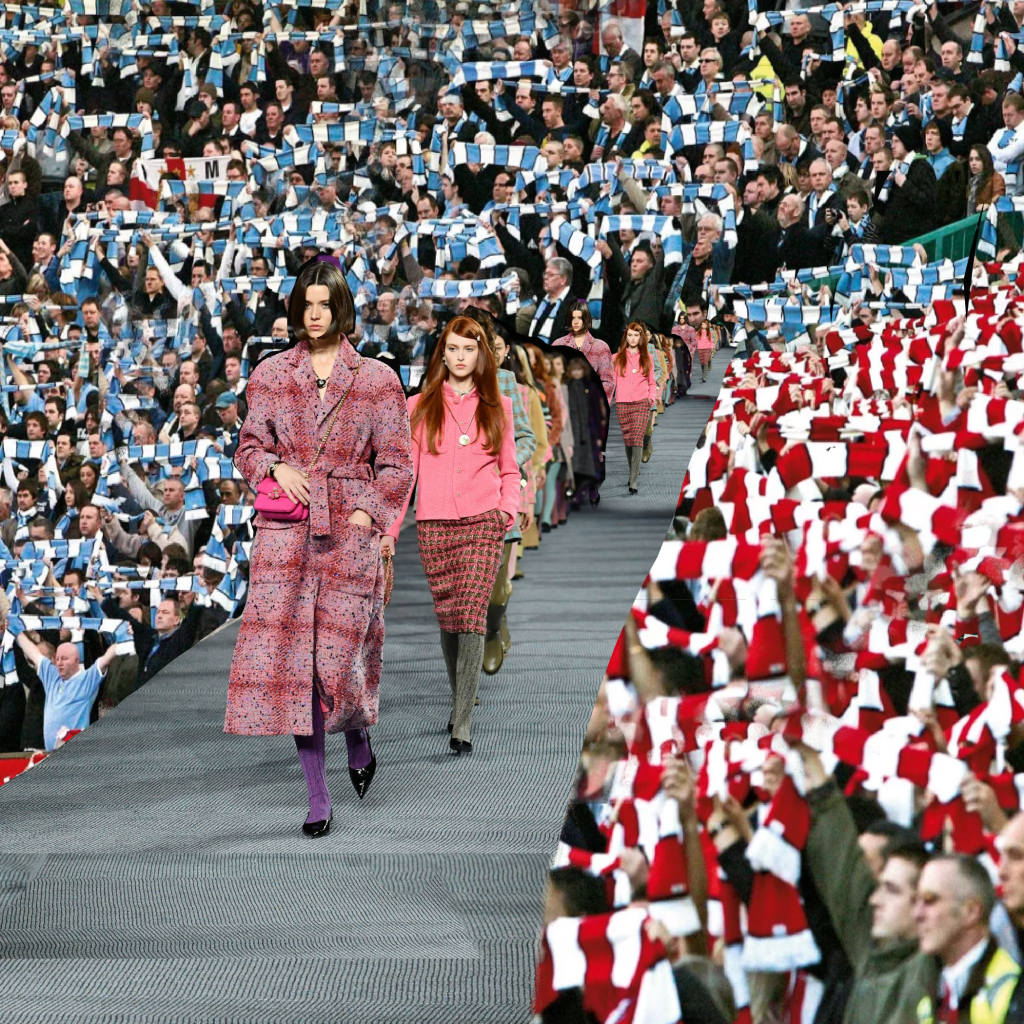
The thought of Chanel hosting their Métiers d’Art show in Manchester makes lots of people laugh. Chanel’s image seems to contrast everything that the area signifies. With rumours (a builder) saying that the show will be happening in the Northern Quarter, people don’t see how that location can compare to the other ‘glamorous’ cities the Métiers d’Art show is normally hosted in. Though Chanel hasn’t formally stated why they have chosen Manchester this year, it is clear that their current Creative Director Virginie Viard understands how industrial landscapes have carved the path for luxury fashion. Her own introduction into fashion was through her grandparents who were silk manufacturers, which makes her appreciation for the Manchester area code more apparent.
It seems as though I undermine the city’s image, but I would never do that. Manchester has formed culture in Britain overall and has a major global influence. Through music and fashion and technology, it’s a place of innovation – to not credit them with birthing British identity would be a robbery to the North. You would think this would be reason enough for them to host the show there, and maybe it is (I wouldn’t know); yet when walking between the abandoned mills and refurbished factories [that are now £££ flats], it is impossible to shake off the more sinister legacy the city has left. The industrial revolution was the catalyst for a hyper-capitalist world that has created the perfect conditions for a thriving luxury fashion industry. We can pretend that fashion houses are making pieces ‘for life’ and that they don’t contribute to this fast fashion narrative, but the reality is that they feed off of consumerist trends. The minute that production became about overproduction rather than meeting needs, a culture of overconsumption was born. With the “balance of micro and macro being disturbed”, the luxury fashion market has been enabled to grow to the size of $280.92 billion in 2022. It didn’t simply shift how people were able to profit, but also changed the way in which people chose to design. Post-consumerist designers create with a focus of division, placing emphasis on the social, emotional, and psychological role that objects play. Fashion designers are not exempt to this. We can see this through the brand identity that Chanel has constructed of simplicity and class [timeless] that is restricted to a certain elite group. Even those that wear the same brand are not a part of the same community, as she who wears a vintage Chanel blazer looks down on those wearing the logo t-shirt who turns their nose up at the fake bag. Consumer society has forced us to construct our identities based off of our material desires, segregating us through these ideas. Aesthetics born out of Ma[d]chester were based on fighting this concept but they too became a victim to the cause. Counter conformity has been commoditised, leading to new forms of accelerated consumption that the luxury fashion market relies on.
This is not to say that Manchester is responsible for all this, it’s just an idea of why the Métiers d’Art show might be hosted there. Chanel’s ode to Manchester could just be an appreciation for the working class and subculture, but I find it difficult to ignore the history that has created the basis for a titanic and thriving fashion industry.
 threehundredand10