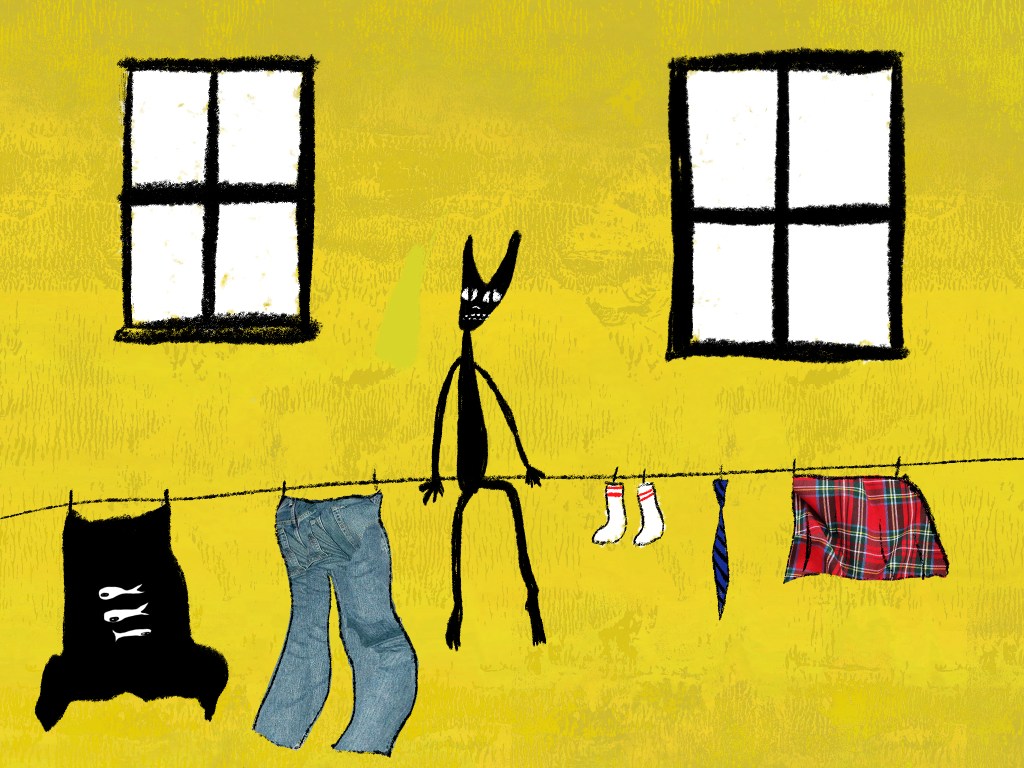
Along the red brick walls of your local neighbourhood are children sitting bored out of their minds. Every place that could be a park is an industrial estate, the schools use car parks as a playground, and what kid has a toy? When every adult is working, the unsupervised world comes to ‘life’ – but there’s nothing to do. There’s many artists that I feel have depicted this throughout the last few decades. Scratching this idea, LS Lowry showed this through his factory settings covered in the figures of children crawling across the canvas. His 1957 painting ‘Francis Street, Salford’ fills the air with smoke as people just stand around the terraced houses. Perhaps it’s because I grew up in Salford, but nothing much seems to have changed. Tish Murtha also captured this perfectly in Newcastle during the 80s, in her photo collection ‘Youth Unemployment’. With the landscape of Thatcher’s England and the people around her, her photos capture a raw reality of social deprivation. Despite their abilities to catch these moments visually, their work is unable to completely immerse you in these truths.
Going beyond the visual aesthetics of British youth culture, Dizzee Rascal’s 2003 debut album ‘Boy in Da Corner’ creates an immersive experience. Raskit traps you in his mind and puts you in the position of those like him. Articulating the emotions of a young boy living on the London estates; his vocal delivery hits you with a new reality and your soul is ripped apart as he deconstructs his reality. Rapping over harsh beats that seek comfort in the remnants of techno, he was able to deliver on a new musical landscape. Although he talks about his experience as a young black man in a rough area of London, I think there’s many elements that apply to a lot of people in the UK. Whether it be the objectification of women in the track “Jezebel” or the admission of suicidal thoughts in “Do It”, the album is an honest portrayal of not only his surroundings but also of a wider societal mindset. Twenty years on, the political themes he tackles remain true in a more exaggerated manner – despite this fact, it still stands strong as a timeless album.
It was the first track “I’m just sittin’ here” that made me stop for a moment. I once read about how homeless people in Bucharest are the most vulnerable to boredom, despite it often being associated with the wealthier. Their chronic under-consumption leaves them with nothing to do, as they simply wait for their next opportunity for work or some stimulants. You have “neither perspective nor peace of mind”. Dizzee paints this image in his borough, being a young man sitting with nothing to do but observe his environment. There’s a hopelessness to his gazing, as he sees that nothing ever changes. As he ages, he realises that his opportunities become more limited – which is why reminisces to an age where he could be happily ignorant to this. He has no ability to do anything but sit and stare – whilst anger and despair brew inside of him. I’m just sitting here / I ain’t saying much I just gaze. Rapping over what sounds like a phone ringtone, there’s disconnection from the outside world. When in this state, his existence is confined to these flats. What he’s seen is more than other people could ever imagine witnessing though, and he carries this burden on his mind.
Raskit refers to the past a lot throughout this album, despite barely being 18 – we see this on track 4 “Brand New Day”. When we ain’t kids no more / Will it still be about wot it is rite now. Unlike others, he was able to recognise the repercussions of his actions at a young age, but still there’s a nostalgia of childhood innocence that becomes the greatest weapon against trauma. He does not exclude himself from those who made the ‘wrong’ decisions because it could have just easily been him. When I look at my life I can’t help but think / Coz I could hav resorted to drugs and drink. Acknowledging the collective experience, he shows a culture of community. Despite him escaping this lifestyle, he is haunted by the people around him that have fallen into this trap. A win for one still feels like a loss for the rest, as they stay stagnant in this environment. Dizzee Rascal is simply a child but he carries the burden of addressing these issues, having adult responsibilities weighing on a young mind. Though he lingers in the past, his only consolation is that a “Brand New Day” can bring better things.
The album ends with the same intensity it begins with. His vocal delivery is harsh but flows smoothly to reveal his vulnerabilities, like clean water running through rusty pipes. Every word he says is carefully curated, at no point does anything he say feel unnecessary. “Do it!” is swirling with realisations about his own mortality and existence. Sometimes I wake up wishing I could sleep for good / And if I had the guts to end it all, believe I would. With a painfully real confrontation of his suicidal thoughts, the listener isn’t even given the opportunity to process what they’ve heard. By slipping in this confession in an almost nonchalant manner, he never has to expand upon what he’s said or even really unpack it. Ultimately, he gives in to a narrative of toxic masculinity. What he does follow up with is But I’ll survive cause it’s what I do best. Working class, deprived areas drill a message that there is ‘no success without struggle’. If there is anything which is done best, it is survival.
Twenty years later, “Boy in da Corner” remains a staple into understanding British youth culture. Dizzee Rascal’s album is an honest portrayal of the average living experience in the UK. Whether it’s something you relate to or it forces you out of your bubble, the vivid audio-visual experience remains scarred into your mind. From the first to the thousandth listen, “Boy in da Corner” will never be worn down.
 threehundredand10