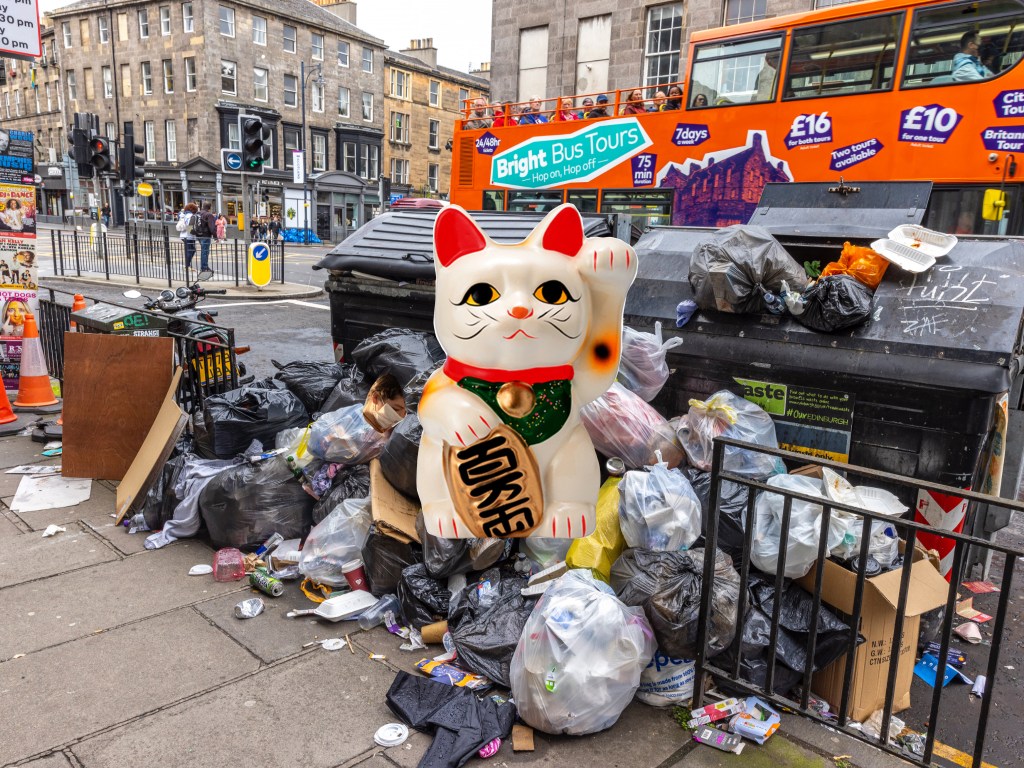
If you forget to take the bins out, you’ll see your waste piling up. Sometimes curiosity gets the best of you and you just start inspecting what’s in the bins. Maybe you notice that you ate a lot of frozen pizzas one week, and that’s slightly depressing, or that someone accidentally tossed a fork away. Ultimately, you could brave it and take the bags out – or you can leave it. Hope that somebody will do the dirty work for you; because when it’s you it feels hard, but when it’s them it feels easy. Where does one draw the line? It’s only when we feel our moulding baggage begin to take over somebody else’s life that we are able to recognise how much easier it would have been to just clean it up ourselves.
Sam Ray’s [or Ricky Eat Acid or Heroin Party…] 2012 album “Summer Made Me Blue; Summer Gave Me Sky” features a song called “If I Cleaned Everything Would You Come Back?”. It’s the last song of the album, he ends the project in such a simple way. Its isolated instruments play the same tune (piano, cello, etc.) with the only lyrics being that of the title. Some may say it’s repetitive and lacks emotion, but I feel it to be a song ripe with hurt. He says “if I cleaned everything would you come back?”, unwilling to get rid of the dirt unless that person is wanting to return. It’s one or the other. To me, this song feels like trying to prove the love you have for somebody but being unable to overcome yourself. The actions that you think prove how you feel just fall flat for the other person. Words can be difficult to use, you end up just going over the same constructed sentence hoping that the message you want to share goes through. How do you open yourself without overwhelming the other person? Are you just unleashing an overly full bin on somebody else? Are you even capable of cleaning it up? I can only speak for what I think about this song though, even though I like to read what other people have said.
A girl left a comment on a forum about this song saying “I wish that were me, I wish I were cleaner”. She shared a paragraph explaining what she meant by this. Her feelings of inadequacy, comparing herself to what she sees as the perfect girl. She sees this girl talking to the “man of her dreams”, her house is beautiful, she’s top of all her classes – “she will go far in life”. I click on her account and start scrolling back to see all the things she has written on the forums. There’s questions asking for skin lightening tips, jokes about Smosh videos, her talking about the toys she bought as an adult that she could never have as a kid, diet pill recommendations, and a reply reading “I’m sorry you had such a tragic childhood, I hope you find the love and happiness you deserve”. I don’t interact with the initial post I found, because at this point I feel like it has become too intimate. We put certain images of ourselves out into the world, but they don’t always reflect who we actually are. I don’t know this girl; yet in the three minutes I spent looking at her digital identity, I was able to construct a clear image of who she is. Maybe the hours she spends online don’t help her, but she seems pretty ‘clean’ to me. She seems real.
Personally, I don’t really mind taking out the bins. I like being able to get air for a moment, even if I am walking down old town in the most horrific outfit to get the job done. Last year, the binmen were on strike so all the bags piled up on the street during the fringe, so I feel it to be my duty to do my job so they can do theirs. You can appreciate the effort they put into making it all disappear once you see how much more disgusting cities can get without them. Robin Nagle did an ethnography where she became a ‘san man’ in New York, and there’s one story I rather enjoy from it. When working in the early mornings going from house to house in a nice area of Manhattan, she and her partner start looking for ‘mongo’. ‘Mongo’ is the hidden treasure you find in the rubbish. Although she isn’t great at it (ripping open bags full of maggots and diapers), her partner is more experienced and doesn’t need to waste time with it. When it gets a bit later, people start waking up and leaving their houses for work. They don’t really notice the sanitation workers, and if anything go out of their way to ignore them. At one point, a woman stepped out of her house and captured the attention of everyone working on the truck. With the setting of the rising sun and the beautiful homes, this slender beauty stepped into their sights. It seems like it was intimate and precious enough for the memory to be considered its own ‘mongo’. I imagine this like when you find a deer trusts you enough to let you look at them for a few seconds before they run into the forest. Nagle narrated the moment with a poem by Richard Wilbur.
Transit
A woman I have never seen before
Steps from the darkness of her town-house door
At just that crux of time when she is made
So beautiful that she or time must fade.
What use to claim that as she tugs her gloves
A phantom heraldry of all the loves
Blares from the lintel? That the staggered sun
Forgets, in his confusion, how to run?
Still, nothing changes as her perfect feet
Click down the walk that issues in the street,
Leaving the stations of her body there
Like whips that map the countries of the air.
RICHARD WILBUR
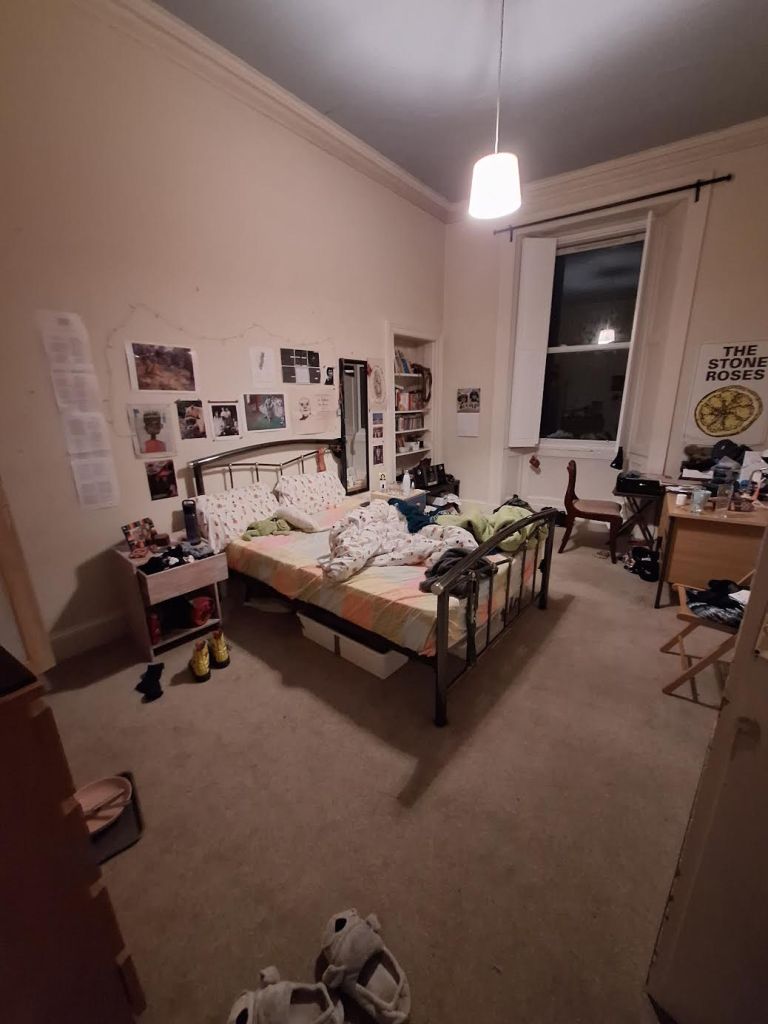
If Robin Nagle hadn’t been there, then it would’ve just been a lost moment. Amongst rubbish, so much is lost. I went to an exhibition the other day and I met the photographer whose work it was. He said that there were boxes and boxes of negatives that he lost when he was moving, that he threw them away in the overwhelming process. Accidentally creating ‘mongo’. Arguably it’s easier and maybe healthier to throw things away like this rather than hoard. There’s an artwork that most people immediately think of when ideas of uncleanliness are brought up… Tracey Emin’s 1988 ‘My Bed’, inspired by her depressive episode where she did nothing but lay in her bed for days on end only drinking alcohol. There’s cigarettes, used condoms, empty vodka bottles, secretion stains and menstrual blood, just general filth. When I worked at the National Gallery over the summer, I spent a shift working in the CCTV room. The security there met Tracey Emin, which was not a pleasurable experience, and saw this exhibition when she had a retrospective at the Modern buildings. They didn’t appreciate the work very much, which I find very valid. As someone whose room can get to look like this, I am not really sure how I feel about it [although I think her status as an artist doesn’t give her the right to be a C u Next Tuesday].

I took a picture of my own room before I left Edinburgh the other day. There have been days where it’s looked better but I made my own attempt of leaving it tidy. Didn’t take the bin out of my room either. Maybe when I return I will root through it, and realise that it’s not my rubbish anymore.
 threehundredand10